






English
Technologies
General description
Precision bar and wire drawing for industrial applications
Bar and wire drawing is a modern cold forming technology that enables the production of products with high precision, excellent surface quality and defined mechanical properties.
The hot-rolled raw material is passed through a special drawing tool, resulting in:
-
precise dimensional stability
-
smooth, even surface
-
increased strength and hardness
-
economical production without material loss
is available.
The technology allows not only the production of round bars and wires, but also the production of unique profiles — in the form of squares, hexagons, semicircles, omegas, keyway circles and other special designs.
The desired mechanical properties are precisely adjusted in our modern, protective gas annealing furnaces.
Our products are used in the automotive, construction, mechanical engineering and many other industries in all areas where high-precision and reliable raw materials are required.
Bar steel production - 4mm-25mm
Cold Drawn Steel Bars
Cold drawn steel bars are produced using a precision cold forming process in which the cross-section of the material is reduced while significantly improving dimensional accuracy, surface quality, and bar straightness.
During the cold drawing process, the material is pulled through a forming die, enabling the production of high-precision bright bars with excellent mechanical properties and exceptional straightness.
In addition to standard round bars, the process allows the production of various custom cross-sectional profiles, including:
-
Hexagonal
-
Square
-
Rectangular
-
Semi-circular
-
Linear bearing tracks
-
Other custom-designed profiles
Size Range
Production diameter range:
4.0 – 25.0 mm
Bar length:
2,000 – 6,000 mm
or custom lengths according to customer specifications
Technical Specifications
Diameter tolerance:
h9 – h11
Length tolerance:
–0.0 / + max. 50.0 mm
(tighter tolerances available upon request)
Bar straightness:
1.0 mm / 1000 mm
Product Options
Our cold drawn bars can be supplied with several additional options depending on the intended application:
-
With or without heat treatment, according to the required mechanical properties
-
With or without chamfered edges
-
Suitable for automatic feeding into machining centers and automatic lathes
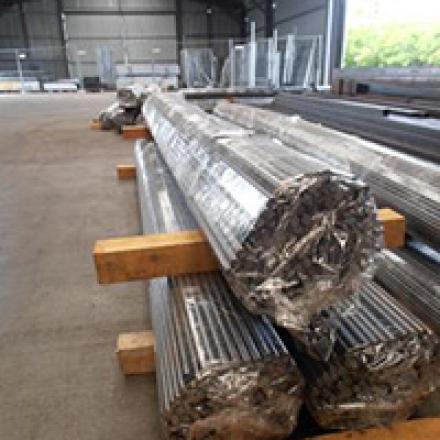
Finished products are delivered oiled for corrosion protection, bundled with steel straps at four points per ton, and wrapped in protective foil.
Manufacturing Process
The raw material used in our production is hot-rolled wire rod, either alloyed or non-alloyed, with low or high carbon content.
Production Steps
- Pre-straightening - The coiled wire rod is straightened before further processing.
- Surface cleaning - The scale layer formed during hot rolling is removed by shot blasting with steel shot, ensuring a clean surface for the drawing process.
- Cold drawing - The prepared wire is drawn through a precision forming die to achieve the required diameter and dimensional accuracy.
- Stress-relief straightening - The reduced cross-section bars pass through additional straightening units to ensure high straightness.
- Cutting - Bars are cut to the required length using a flying shear system.
- Post-processing
- Additional finishing operations may include:
-
Polishing
-
Stress relieving
-
Optional machined chamfering on one or both ends
-
Applications
Cold drawn steel bars are widely used in several industrial sectors:
Construction Industry
-
Anchor bolts
-
Purlin components
-
Base material for threaded rods
Mechanical Engineering
-
Stud bolts
-
Threaded rods
-
Raw material for automatic machining processes
-
Hydraulic connectors
-
Pneumatic connectors
Household Appliances
-
Component manufacturing
Automotive Industry
-
Electric motor shafts
-
Shafts for electrical drives and other power transmission systems
-
 Melegen hengerelt huzalHot rolled wire in coil
 -
 ElőegyengetésStraightening
 -
 SzemcseszórásShot Blasting
 -
 HúzásDrawning
 -
 Lézeres átmérő mérésLaser diameter measuring
 -
EgyengetésStraightening
-
 VágásCutting
 -
 Átmérő vizsgálatDiameter testing
 -
 HalmozásStacking
 -
 SzállításShipping
Coil steel production 2mm-24mm
Cold Drawn Steel Wire (Coils)
Cold drawn steel wire is produced using a plastic cold forming process in which the cross-section of the material is reduced through drawing. This process enables the production of steel wire with high dimensional accuracy, improved surface quality, and excellent mechanical properties.
The technology allows the production of a wide variety of cross-sectional shapes and surface finishes, making the material suitable for numerous industrial applications.
Size Range
Production diameter range:
2.0 – 24.0 mm
Available Shapes
The following cross-sectional profiles can be manufactured:
-
Hexagonal
-
Square
-
Rectangular
-
Semi-circular
-
Other custom profiles
Surface Finishes
Phosphated surface
-
Ideal for further cold forming operations
-
Common raw material for bolt and rivet production
Bright / mirror surface
-
Excellent for further metal coating processes such as chromium or nickel plating
-
Suitable for the production of shopping carts and various wire products
Technical Specifications
Diameter tolerance:
h9 – h11
Production diameter range:
2.0 – 24.0 mm
Products can be supplied:
-
Without heat treatment, or
-
Heat treated according to required mechanical properties
Packaging
Finished products are delivered in the following forms:
Regularly wound coils
-
500 – 1000 kg
-
Secured with steel straps at four points
Loose coils
-
250 – 500 kg
-
Bundled with steel wire at four points
Upon request, products can also be delivered:
-
on timber supports
-
on pallets
-
with protective foil packaging
Each coil is secured with four-point strapping or binding.
Manufacturing Process
The raw material used in our production process is hot-rolled wire rod, either alloyed or non-alloyed, with low or high carbon content.
Production Steps
- Raw material preparation (pre-straightening) - Straightening of the coiled wire rod prior to processing.
- Surface preparation - The scale layer formed during hot rolling is removed by shot blasting with steel shot. For smaller diameters, mechanical brushing is applied.
- Phosphating (optional) - An award-winning technology where phosphate is diffused into the surface of the wire through electrolysis, providing excellent properties for cold forming processes.
- Drawing - The prepared wire is drawn through a precision cold forming die to achieve the required diameter.
- Stress relieving
- Coiling - The finished product is spooled or loosely coiled, according to customer requirements.
- Packaging - Strapped or bundled at four points.
Applications
Cold drawn steel wire is widely used across multiple industries.
Construction Industry
-
Anchor bolts
-
Purlin components
-
Raw material for threaded rods (after straightening)
Mechanical Engineering
-
Fasteners
-
Rivets and blind rivets
-
Cold forged mass-produced components
-
2D and 3D bent wire products
-
Hydraulic connectors
-
Pneumatic connectors
-
Springs
Household Appliances
-
Small appliance components
-
Refrigerator shelves
-
Raw material for shopping carts
Automotive Industry
-
3D bent components
-
Suspension elements
-
Seat components
-
Melegen hengerelt huzalHot rolled wire in coil
-
EgyengetésStraightening
-
 Felület előkészítés/opcionális szemcseszórásBending/Brushing/Shot Blasting
 -
 FoszfátozásPhospating
 -
HúzásDrawing
-
 CsévélésCoiling
 -
SzállításShipping
Soft wire production
Annealed Steel Wire
Annealed steel wire is produced using a cold drawing process similar to nail wire manufacturing, where the cross-section of the material is reduced through plastic deformation. This process increases the strength of the material.
The increased strength is subsequently reduced through a bright annealing process, carried out in modern protective atmosphere heat treatment furnaces. As a result, the annealed wire features a clean, scale-free and dust-free surface.
Size Range
Production diameter range:
1.8 – 5.0 mm
Technical Specifications
Diameter tolerance:
h11
Surface condition:
Bright annealed, clean surface
Heat treatment:
Annealed
Packaging
The product is supplied in loose coils in the following weights:
-
50 kg
-
100 kg
-
150 kg
-
200 kg
-
250 kg
The coils are bundled at four points with steel wire.
Upon request, products can also be delivered:
-
on timber supports
-
on pallets
After annealing, each individual coil is always secured at four points.
According to customer requirements, multiple coils can also be bundled together with steel strapping for easier handling and transportation.
Manufacturing Process
The raw material used in production is hot-rolled low-carbon wire rod.
Production Steps
- Surface preparation - The scale layer formed during hot rolling is removed using mechanical brushing equipment.
- Drawing - The steel wire is drawn through a precision cold forming die to achieve the required diameter.
- Stress relieving / straightening - The reduced cross-section wire passes through additional straightening units.
- Coiling - The wire is formed into loose coils prior to heat treatment.
- Annealing - Heat treatment is carried out in a protective atmosphere furnace, resulting in a bright and clean surface.
- Packaging - Finished coils are bundled at four points, with the option of combining multiple coils into larger bundles.
Applications
Annealed steel wire is widely used in several sectors.
Construction Industry
-
Binding wire for construction work
-
Reinforcement tying wire
-
Temporary fastening solutions
Agriculture and Horticulture
-
Floristry wire
-
Bale tying wire
Industrial Applications
-
Raw material for suspension hooks used in hot-dip galvanizing and electroplating plants
-
Raw material for suspension hooks used in powder coating and painting lines
-
Melegen hengerelt huzalHot rolled wire in coil
-
Felület előkészítésBending/Brushing
-
HúzásDrawing
-
EgyengetésStraightening
-
PergetésCoiling
-
LágyításAnnealing
-
SzállításShipping
Nail wire production
Nail Wire Production
Nail wire is produced using a cold drawing process, a plastic deformation method in which the cross-section of the material is reduced. This process results in an increase in the material’s strength.
During the drawing process, the diameter of the hot-rolled wire rod is reduced, producing a finished product with mechanical properties suitable for use as raw material in the production of nails, staples, and other high-strength products.
During drawing, the surface of the wire is protected by a drawing lubricant powder, which adheres to the surface and prevents damage during processing.
Size Range
Production diameter range:
1.8 – 12.0 mm
Technical Specifications
Diameter tolerance:
h9 – h11
Products can be supplied:
-
Without heat treatment, or
-
Heat treated according to required mechanical properties
Surface condition:
Protected with drawing lubricant powder
Packaging
Regularly wound coils
-
500 – 1000 kg
-
Secured with steel straps at four points
Loose coils
-
100 kg
-
250 kg
-
500 kg
Bundled with steel wire at four points.
Upon request, products can also be delivered:
-
on timber supports
-
on pallets
-
with protective foil packaging
Each coil is secured with four-point strapping or binding.
Manufacturing Process
The raw material used in production is hot-rolled low-carbon wire rod.
Production Steps
- Surface preparation - The scale layer formed during hot rolling is removed using mechanical brushing equipment.
- Drawing - The steel wire is drawn through a precision cold forming die to achieve the required diameter.
- Stress relieving and straightening - The reduced cross-section wire passes through additional straightening units.
- Coiling - The product is packed either loosely coiled or spooled, according to customer requirements.
- Packaging - Finished coils are secured with four-point strapping or binding.
Applications
Nail wire is widely used in multiple industries.
Construction Industry
-
Raw material for nail production
-
Anchor bolts
-
Purlin components
-
Threaded rods (after straightening)
-
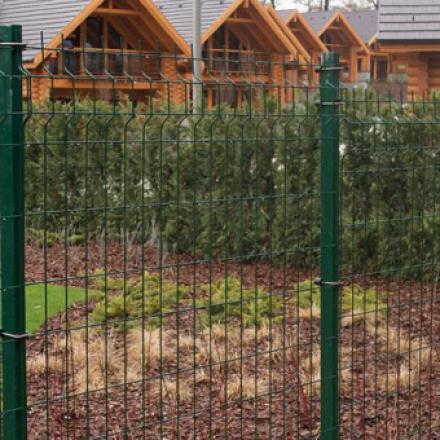
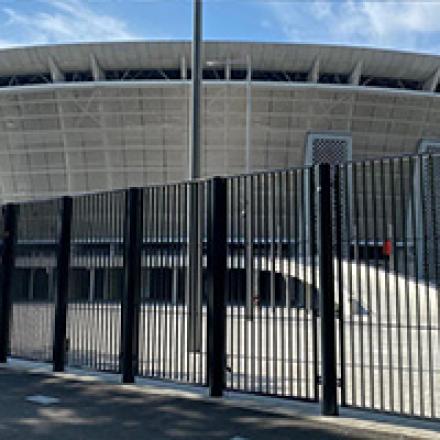
Raw material for rod-type fence panels (after galvanizing or powder coating)
-
Raw material for chain-link and coil fencing (after galvanizing)
Household Appliances
-
Raw material for small appliance components
-
Refrigerator shelves (after powder coating)
-
Melegen hengerelt huzalHot rolled wire in coil
-
RevetörésBending/Brushing
-
HúzásDrawning
-
Pergetés/CsévélésColling/Spooling
-
SzállításShipping
Galvanized coil steel production 1.8mm-8mm
Galvanized Steel Wire
Galvanized steel wire is produced using a technology based on nail wire manufacturing. During the drawing process of nail wire, the cross-section of the material is reduced, which results in increased tensile strength. As a result, the finished product becomes suitable for applications requiring higher mechanical strength.
Our galvanizing line uses finished nail wire as the base material. Following chemical surface cleaning, a zinc coating is applied to the steel surface through an electrolytic galvanizing process, which is complemented by passivation treatment to increase service life and enhance corrosion resistance.
Size Range
Production diameter range:
1.8 – 8.0 mm
Technical Specifications
Diameter tolerance:
h11
Adjustable zinc coating thickness according to customer requirements
Modern high-performance galvanizing technology
Packaging
The finished product is supplied in loose coils in the following weights:
-
100 kg
-
250 kg
-
500 kg
-
800 kg
The coils are secured with steel straps at four points.
Upon request, products can also be delivered:
-
on pallets
-
with protective foil packaging
Manufacturing Process
The raw material used in production is hot-rolled, non-alloyed low-carbon wire rod.
Production Steps
- Surface preparation - The scale layer formed during hot rolling is removed using mechanical brushing equipment.
- Drawing - The steel wire is drawn through a precision cold forming die to achieve the required diameter.
- Stress relieving / straightening - The reduced cross-section wire passes through straightening units.
- Intermediate spooling - The wire is temporarily wound onto spools during the production process.
- Chemical pre-treatment - Cleaning in alkaline chemical baths.
- Galvanizing - Application of a zinc coating through an electrolytic galvanizing process.
- Passivation - Additional treatment to improve the durability and corrosion resistance of the zinc layer.
- Final packaging - Loose coils secured with four-point strapping or binding.
Applications
Galvanized steel wire is widely used in several industries.
Construction Industry
-
Raw material for rod-type fencing systems
-
Raw material for chain-link and coil fencing
Household and Industrial Applications
-
Refrigerator shelves (after powder coating)
-
Household metal components, such as bucket handles
-
Hidegen húzott huzalCold drawn wire
-
LúgozásAlkaline
-
HorganyzásGalvanizing
-
PassziválásPassivation
-
PergetésColling
-
SzállításShipping
Steel rod production 1.8mm-8mm
Steel Rod Production
(smooth or ribbed surface)
Production diameter range:
1.8 – 8.0 mm
Steelvent Zrt. manufactures steel rods using two different production technologies, depending on customer requirements, ensuring high dimensional accuracy, excellent straightness, and shape stability.
Production Technologies
Wire-based technology
In this process, the cold drawn wire production is followed by straightening and cutting operations.
-
The reduction of the cross-section results in increased tensile strength
-
The straightening process produces dimensionally stable and precisely straight rods
-
Products can also be manufactured from galvanized raw material, providing corrosion protection
-
During the drawing process, the surface is protected by drawing lubricant powder
Cold rolling technology
In this process, the reduction of the cross-section is achieved using ribbed rolling elements.
-
Ribbed or smooth surface designs can be manufactured
-
Increased strength ensures excellent shape stability
-
After straightening and cutting, the final product is a high-precision straight rod
Both technologies ensure excellent dimensional stability and straightness.
Technical Specifications
Production diameter range:
1.8 – 8.0 mm
Diameter tolerance:
h11
Products can be supplied:
-
Without heat treatment, or
-
Heat treated according to required mechanical properties
Available length:
800 – 6000 mm
Packaging
Bundle weight:
500 – 1000 kg / bundle
Bundles are secured at four points with steel straps or wire ties.
Note:
For smaller diameter rods, longer lengths (above 2000 mm) may require special packaging solutions to ensure safe handling and transport.
Manufacturing Process
The raw material used in production is hot-rolled low-carbon wire rod.
Production Steps
- Surface preparation - The scale layer formed during hot rolling is removed using mechanical brushing equipment.
- Drawing or cold rolling - The required diameter is achieved either by cold drawing dies or by ribbed rolling units.
- Straightening - Rod straightness is achieved using rotary straightening lines.
- Cutting - Rods are cut to customer-specified lengths.
- Packaging - Finished bundles are secured with four-point strapping.
Applications
Construction Industry
-
General-purpose steel rods
-
Reinforcement inserts for precast decorative concrete elements
-
Raw material for rod-type fence panels
-
Melegen hengerelt huzalHot rolled wire in coil
-
RevetörésBending/Brushing/Shot Blusting
-
HúzásDrawing
-
EgyengetésStraightening
-
VágásCutting
-
HalmozásStacking
-
SzállításShipping


